Integrating SEAD and CEMA is more than a procedural improvement; it changes how NATO defeats a modern IADS
Introduction
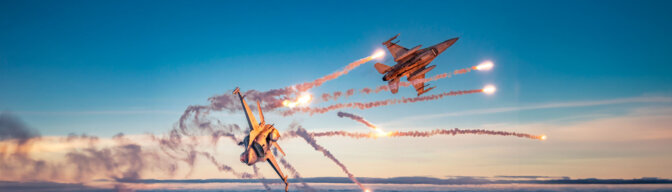
Russia’s war in Ukraine has shattered long-held assumptions about air superiority. Events of the past four years have shown that even modern air forces may struggle to dominate contested skies as unmanned aerial systems (UAS) proliferate and aircraft losses increase on both sides.1 While the claims of air superiority’s demise are overstated, one lesson is clear: advanced Integrated Air Defence Systems (IADS) now underpin adversary Anti-Access/Area Denial (A2/AD) strategies and pose a direct challenge to how airpower is employed and sustained in future conflicts.2
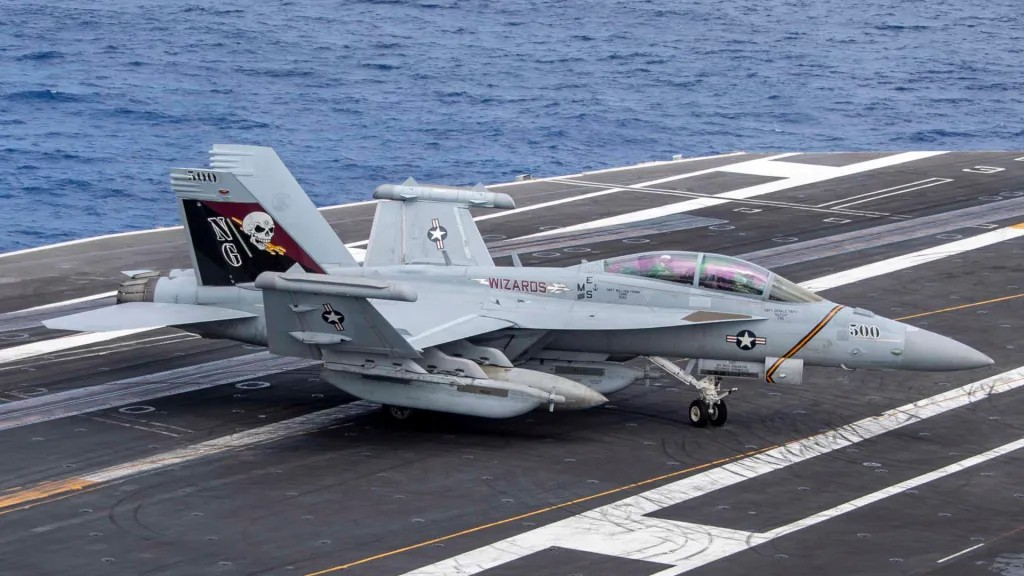
NATO’s ability to deter and defend against a modern, IADS-equipped adversary requires a multi-domain suppression campaign that is continuous, adaptive, and resilient. Future suppression of enemy air defences (SEAD) missions cannot rely solely on the traditional air-domain-centric model of airborne SEAD platforms – such as dedicated electronic attack aircraft, Wild Weasel units, and fifth-generation strike fighters- that focus primarily on individual surface-to-air threats. SEAD must evolve to employ all available assets and effects capable of neutralising a sophisticated IADS.3 Persistent electronic attack (EA), cross-domain cyber operations (CO), and precision kinetic effects must be synchronised to create and exploit windows of opportunity at scale. NATO therefore needs a framework that enables these effects to be sustained, which is central to maintaining deterrence, freedom of action, and credibility in collective defence.4
This process begins with integrating of air-delivered SEAD effects with cyber electromagnetic activities (CEMA). CEMA is not a combination of jamming and hacking techniques; rather, it is an operational framework that treats cyberspace and the electromagnetic spectrum (EMS) as a unified manoeuvre space. Within this framework, electronic warfare (EW) and cyber capabilities converge to generate effects that directly shape an adversary’s IADS by manipulating the EMS, cyber terrain, and information environment. Like airborne SEAD, CEMA can include EA techniques such as jamming, deception, and spoofing. It also encompasses more intrusive cyber operations that target radar software, command and control (C2) infrastructure, or air defence networks.5
Integrating SEAD-CEMA effects must extend beyond coordination. It requires an offensive counterair system-of-systems approach in which CEMA operators are fully embedded in mission planning and execution alongside airborne SEAD specialists. This ensures that electromagnetic attack, deceptive effects, cyber actions, and kinetic fires are aligned in time and intent. Only when these non-kinetic and kinetic tools are synchronised as a single, convergent effort can NATO generate sufficient effects to suppress or neutralise a modern IADS.6 This SEAD-CEMA integration supports a multi-domain strategy aimed at achieving air superiority and neutralising enemy air defences through the synergistic application of kinetic and non-kinetic effects.7
The Operational Need for SEAD-CEMA Integration
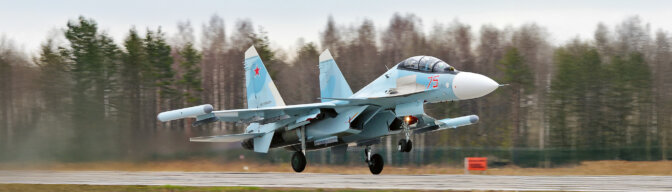
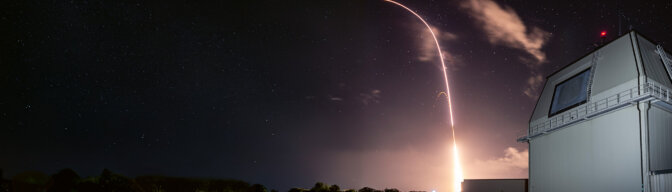
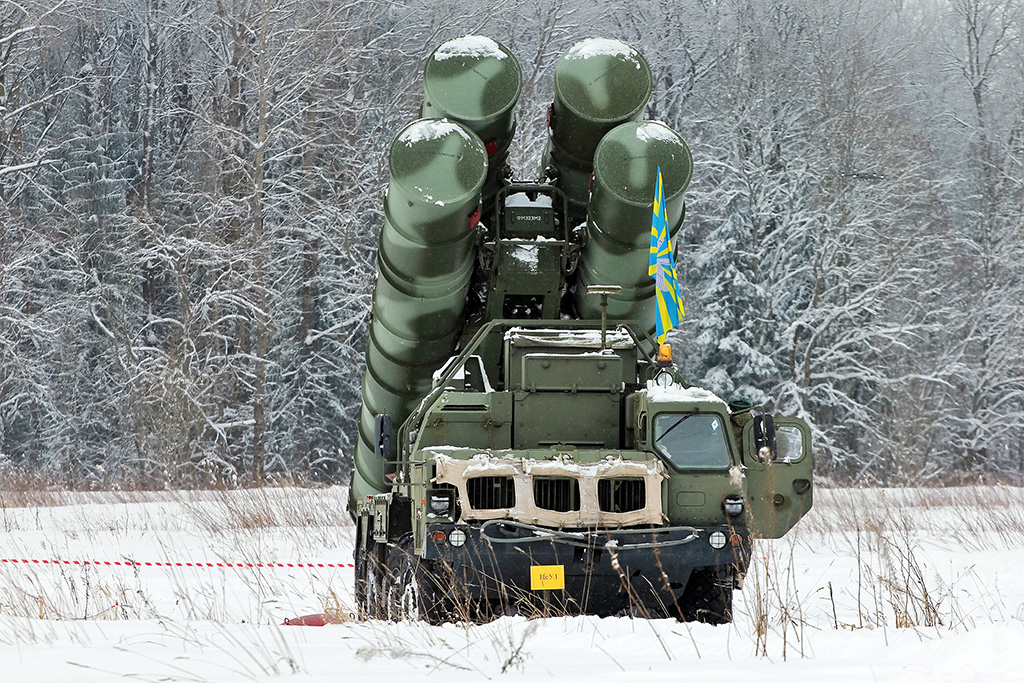
Advanced air defence systems with sophisticated mobility, redundancy, and electronic countermeasures (ECM) can degrade the effectiveness of traditional air-employed SEAD.8 Russia’s IADS demonstrate how a multi-layered defence architecture can rapidly detect, track, and neutralise traditional aerial threats in a congested environment. The SA-21 Growler (S-400) and S-500 Prometheus can target aircraft, missiles, and satellites. Mobile systems such as the Buk-M2 (SA-17) and Tor-M1/M2 (SA-15), supported by powerful EW platforms like the Krasukha-4, Divnomorye, and Murmansk-BN, disrupt, deceive, and degrade adversary sensors. Their effectiveness is strengthened by Russia’s sensor-fusion and battle-management networks, such as Baikal-1M, Polyana-D4M1, and Nebo-M, which provide shared tracking data and coordinated engagements.9 When fully integrated, such an advanced IADS poses a significant risk to traditional SEAD platforms unless supported by synchronised multi-domain effects, including cyber, space, and electromagnetic activities.10 Without synchronised kinetic and non-kinetic effects to suppress a modern IADS, creating even limited pockets of air superiority is nearly unachievable.
Modern IADS are no longer isolated batteries but integrated kill webs. Combat platforms and air defence systems are increasingly networked, integrated, and software-dependent to achieve better effects. Adversaries employ agile radar systems, such as active electronically scanned arrays (AESA), which feature advanced signal agility, low probability of interception, and rapid beam steering. Modern AESA radars also employ frequency-hopping patterns that outpace human reaction times, making AI-enabled CEMA systems essential to match their operational tempo. To counter such capabilities, NATO requires flexible, software-based jamming systems that can adapt quickly to changing radar signals. These systems must be integrated with cyber effectors to dynamically manipulate adversary decision cycles and electromagnetic signatures in real time.11
An Effects-Based Framework: Lethal vs Non-Lethal SEAD and the Role of CEMA
SEAD uses various means to produce both lethal and non-lethal effects that degrade, deceive, deny, disable, or disrupt adversary IADS, as shown in Table 1.12
Non-lethal SEAD effects, such as those achieved with airborne electronic attack (AEA), rely on EMS jamming to defeat surveillance and fire control radars and to disrupt communications. Lethal SEAD effects involve physical force or energy transfer, often via traditional kinetic weapons such as ARMs and precision strike weapons. In the future, emerging technologies, most notably Directed Energy Weapons (DEWs), including high-energy lasers and high-power microwaves, may further expand the lethal SEAD options.
CEMA provides a range of non-lethal effects that offer time-limited and reversible means to suppress adversary air defences. Traditional SEAD methods, including the use of ARMs and supporting EA, remain fundamental to disrupting IADS. However, the increasing complexity and resilience of modern IADS require these methods evolve. To remain effective, SEAD must incorporate the full spectrum of CEMA, blending kinetic, electronic, and cyber capabilities into a unified operational concept. This requires integrating CEMA capabilities and effects from the earliest stages of operational design and campaign planning, co-locating cyber and EW planners within air tasking cycles, and synchronising target development, effects sequencing, and battle damage assessment across all domains rather than treating them as parallel or supporting activities.13
Cyber operations can precondition the electromagnetic battlespace by targeting enemy radar and C2 networks, altering algorithms, severing feedback loops, or injecting deceptive data into sensor fusion chains.14 When synchronised with real-time jamming, pre-kinetic and non-kinetic effects combine to deepen suppression by simultaneously degrading sensor accuracy and corrupting the decision-making architecture. This CW–EW synergy extends the duration and depth of suppression by forcing adversary systems to process false or contradictory information even after jamming has ceased. As a result, friendly platforms gain longer operational windows with reduced exposure. Durable suppression, therefore, arises not from the scale of disruption alone, but from the combined erosion of sensor reliability and operator confidence across multiple layers of the IADS.15
It is important to recognise the temporal asymmetry between cyber shaping operations and EW or kinetic SEAD. Cyber access development, payload pre-positioning, and network mapping form part of the ´silent-entry´ phase (Phase 0), often unfolding weeks or months before any overt engagement.16 By contrast, EW and kinetic suppression constitute ´loud-entry´ actions (Phase 3), executed within minutes once an IADS begins emitting and strike packages commit.17 This temporal mismatch reinforces why cyber must precondition the battlespace in advance. Well-placed cyber footholds can shape radar logic, disrupt C2 processes, and induce predictable defensive behaviours that significantly amplify the effects of real-time jamming and kinetic strike. When latent cyber actions and immediate electromagnetic pressure are synchronised, suppression becomes deeper and more durable, as IADS operators struggle to differentiate technical faults from adversary-induced manipulation.
The future of SEAD relies on this convergence: a cross-domain, multi-layered approach that synchronises kinetic fires, EW, and CW. By leveraging SEAD-CEMA, NATO can establish superiority within contested electromagnetic environments (EME), disrupting enemy air defences through destruction, deception, denial, and digital exploitation.
| Category | Means | Description |
| Physical Destruction (Hard Kill)
|
Anti-Radiation Missiles (ARM) | Missiles that home in on radar emissions to destroy radar sites. |
| Precision-Guided Munitions (PGMs) | Highly accurate bombs/missiles used to strike IADS components. | |
| Directed Energy Weapons (DEW) | Lasers or high-energy beams used to damage or destroy electronic systems. | |
| High-Power Microwaves (HPM) | Emits powerful microwave bursts to disable enemy electronics. | |
| Targeted Kinetic Strikes | Physical attacks on radars, SAM batteries, or C2 facilities. | |
| Special Operations Forces (SOF) | Covert missions to disrupt or sabotage IADS infrastructure. | |
| Support Jamming (SJ) | Jamming that degrades enemy radar and communications. | |
| Sensor Denial (Soft Kill – EW) | Escort Jamming (EJ) | Jamming support from aircraft accompanying strike packages. |
| Stand-In / Stand-Off Jamming | Jamming is conducted from near-target or distant positions. | |
| DRFM Repeater Jamming | Generates coherent false targets (RGPO/VGPO). | |
| Radar Spoofing / Deception | Manipulates radars to display false tracks or ghost formations. | |
| GPS / PNT Denial | Denies accurate navigation/timing cueing to disrupt engagements. | |
| Logic / Network Corruption (Cyber)
|
Cyber Intrusion into IADS | Gains access to modify, disable, or corrupt radar/C2 logic. |
| Data Injection / Manipulation | Alter sensor feeds, track tables, or IFF databases. | |
| Admin / Authentication Lockout | Blocks operator access or inhibits system configuration. | |
| C2 Node Disruption | Cyber effects degrade routing, fibre-optic networks, or SATCOM. | |
| Malware Targeting Sensor Firmware | Corrupts radar modes, ECCM routines, timing or processing algorithms. |
Table 1: SEAD Effects and CEMA Contributions Across Lethal and Non-Lethal Means
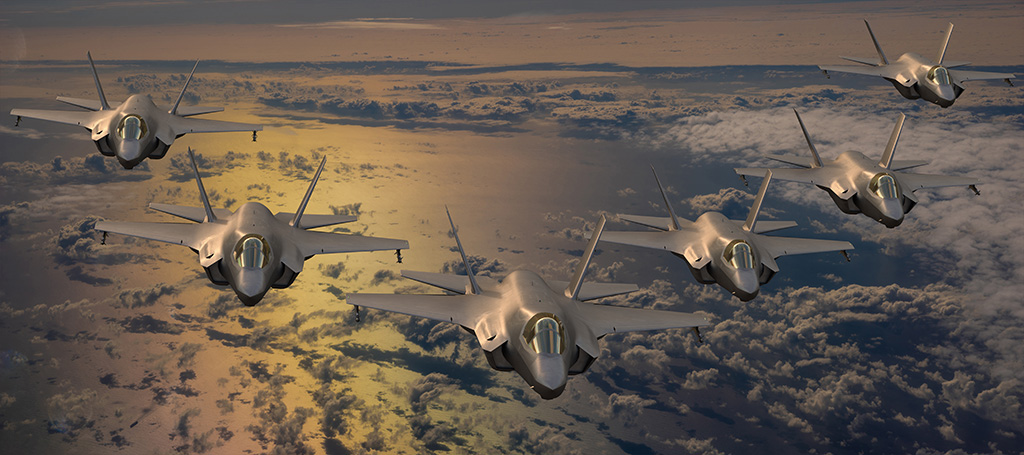
To illustrate how these dynamics unfold in real operations, the following case studies examine SEAD–CEMA integration across permissive, contested, and advanced IADS environments.
Case Study 1: Operation Unified Protector (Libya, 2011): SEAD in a Permissive Environment
NATO’s intervention in Libya ultimately successfully enforced a no-fly zone and neutralised most of Libya’s antiquated IADS. The rapid degradation of Libyan air defences, however, masked significant structural weaknesses in NATO’s SEAD posture.
- Doctrine–Reality Gap. Existing Cold War-era SEAD doctrine was ill-suited to the decentralised and mobile Libyan defences. NATO lacked a doctrinal framework for dynamic SEAD in a fluid operational environment.18
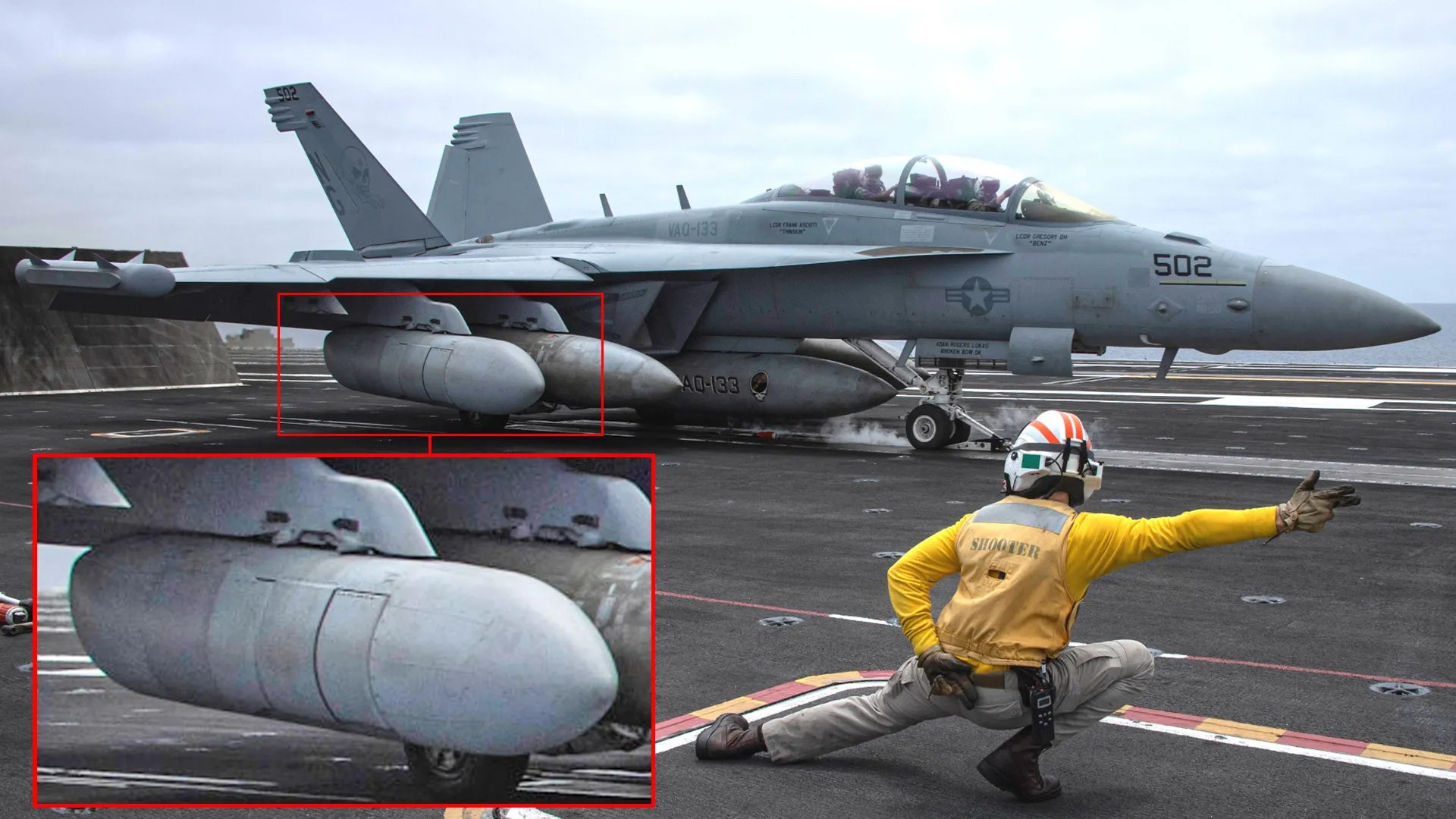
- Over-Reliance on US Enablers. SEAD support to the Alliance depended almost entirely on US Navy EA-18G Growlers and US Air Force F-16CM Wild Weasels, supported by US Air Force intelligence, surveillance, and reconnaissance (ISR) assets (e.g. E-3 AWACS, E-8 JSTARS), aerial refuelling, and precision strike capabilities.19
- Interoperability and C2 Challenges. The transition from the Secret Internet Protocol Router Network (SIPRNET – Odyssey Dawn) to the NATO Secret Wide Area Network (NSWAN – Unified Protector) resulted in delays and data loss, and Battlefield Information Collection and Exploitation Systems (BICES) was not fully integrated with AFRICOM. This was more than a C2 friction point: if NATO struggled to share basic targeting data in 2011, it would not be able to exchange far more complex cyber accesses, EW mission libraries, or EMS threat files in a future SEAD-CEMA campaign. In Libya, we learned a hard lesson: if the network is fragmented, CEMA is impossible.20
Assessment: Unified Protector’s permissive conditions masked the Alliance’s lack of indigenous European SEAD/DEAD capacity. The operation underscored the need for NATO to develop a joint, multi-domain SEAD doctrine that fuses EA, cyber, and ISR into a combined planning and execution framework.21
Case Study 2: The Ukrainian Crucible (2022–Present): Attritional SEAD in a Contested Environment
The Russian invasion of Ukraine provided the first real assessment of SEAD against a modern and adaptive IADS. With no formal NATO involvement and few trained SEAD air operators, Ukraine relied on an attritional, multi-domain suppression, providing rare insight into degrading Russian IADS.
- Innovative Tactics & Centrality of UAS. Ukraine relied heavily on small military and commercial drones to identify Russian SAMs, radars, and EW units, enabling a simple but effective find-to-fire cycle that paired ´finders´ (UAS) with ´shooters´, such as artillery, missiles, and one-way attack (OWA) drones.22
- Multi-Domain Synergy: ISR–Enabled Precision Fires Against IADS. ISR data from drones has been linked to precision fires from high mobility artillery rocket system (HIMARS), M270 guided multiple launch rocket system (GMLRS), and OWA drones, systematically degrading Russian IADS over time, including confirmed strikes on S-400 radars and launchers. This represents a genuine multi-domain SEAD construct, where air/space ISR enable land-based fires to suppress threats to the air domain.23
- SEAD & CEMA Integration. Ukraine rapidly improvised methods of suppression that blended kinetic, EW, and cyber effects. Pilots adopted ´Wild Weasel–style´ tactics, exposing themselves to radar emissions to provoke Russian engagement and enable strikes with Western-supplied AGM-88 HARMs adapted for MiG-29 and Su-27 aircraft. The latter FrankenSAM´ hybrids, Western missiles on Soviet launchers, demonstrated a high degree of battlefield innovation. However, these strikes alone could not permanently suppress a Russian IADS that remained mobile, resilient, and shielded by EW assets such as Krasukha-4 and Leer-3.24
- The CW and EW Dimension. The KA-SAT/Viasat attack in February 2022 was not just a communications disruption; it was a counter-C2 strike that temporarily blinded parts of Ukraine’s command network during the invasion’s opening phase. Ukrainian CO targeted logistics and navigation networks, while tactical jamming, spoofing, and GPS denial created temporary ´windows´ that allowed drones and missiles to penetrate.25 The conflict has thus evolved into a continuous fight for EMS dominance, with both sides employing increasingly low-cost CEMA tools.26
Assessment: Ukraine’s attritional SEAD highlights the need for continuous, multi-domain suppression, rather than episodic strikes, utilising ISR, precision fires, cyber, and EW to degrade IADS steadily. The conflict also reveals the rise of democratised or ´guerrilla´ CEMA, where inexpensive commercial tools—such as Software-Defined Radio (SDRs), Raspberry Pi, and improvised jammers, deliver real operational effects.
Case Study 3: Israel–Iran War (June 2025): Advanced SEAD-CEMA Integration
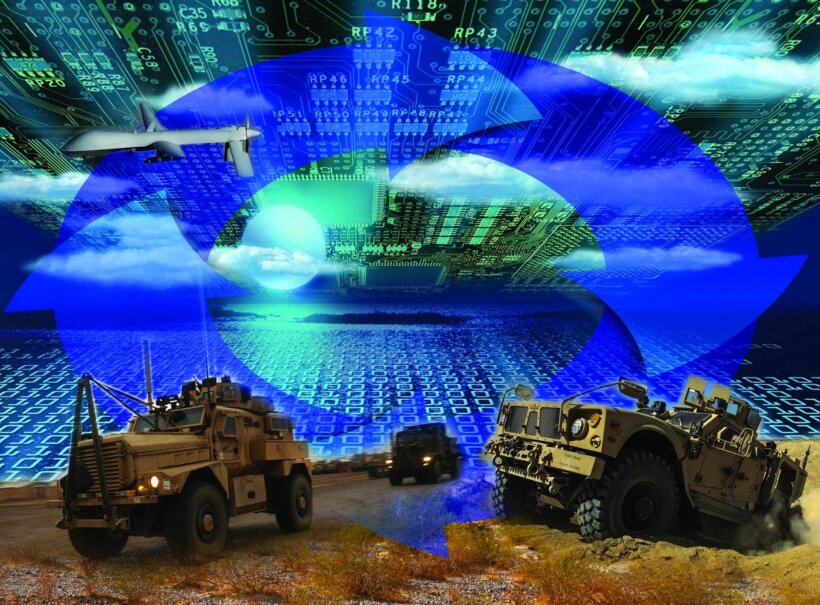
The Israel–Iran conflict demonstrated how SEAD and CEMA can be effectively integrated in a high-intensity campaign against a modern, adaptive IADS. Israel’s networked use of cyber, EW, and precision strikes delivered significant effects with limited assets, while Iran’s mass-saturation approach consumed large stocks of munitions without decisive results-highlighting the limits of quantity without multi-domain coordination.27
- CW–EW Opening Moves. Pre-emptive CO reportedly degraded Iranian radar networks, satellite communications, and C2 nodes in the first hours, creating short ´windows´ for IAF strike packages to enter contested airspace with reduced risk.28 A Mossad-linked mission to sabotage fibre-optic lines and disrupt radar facilities inside Iran compounded the cyber effects, physically degrading Iranian network resilience.
- IADS Resilience & Temporary Kinetic Windows. Even after early blows, Iran dispersed and reconstituted air defence coverage within 24–48 hours, relocating its Khordad-15 and Raad SAM systems and command elements. This limited opportunities for HARM employment, forcing Israel to rely on persistent ISR and dynamic re-attack windows with UAVs.29 Coordinated cyber actions and GPS jamming degraded air defence capabilities and enabled windows for kinetic missions to succeed.30
- Massing Multi-Domain Effects. Iran launched mixed salvos of ballistic missiles and Shahed drones, aiming to saturate Israel’s layered defences. Although most were intercepted, the volume of fires forced the IAF to shift its efforts towards defending key military targets. This created a trade-off: every asset pulled into missile defence was an asset unavailable for SEAD tasks.31 Israel countered with its own waves of UAVs, loitering munitions, and decoys to overload Iranian engagement zones, enabling F-35I Adir aircraft to strike Bavar-373 and S-300 sites protecting Natanz and Fordow. The use of inexpensive decoys to drain SAM magazines mirrors Russian concepts, as seen in Geran/Shahed drones.32
- Layered Multi-Source Intelligence. The use of national intelligence, satellite imagery, and Open-Source Intelligence (OSINT) rapidly revealed movements on both sides. Both sides faced unprecedented transparency.33
Assessment: Iran proved relatively responsive following initial SEAD effects, but Israel maintained the advantage through synchronised cyber, EW, and kinetic actions that created recurring windows of vulnerability. Their persistent SEAD cycles, suppress, exploit, re-suppress, aided by both military intelligence and open-source intelligence (OSINT), ensured proactive suppression of adversary defences to enable other functional objectives (strike, ISR, pursuit of air superiority.
Recommendations
Operational Adjustments
- Establish SEAD-CEMA planning cells. NATO should form integrated SEAD-CEMA cells within Allied Air Command (AIRCOM) and especially at the Joint Force Command (JFC) level, integrating cyber, EW, ISR, and all components (air, land, maritime, space), ensuring multi-domain planning and targeting. These cells must also begin developing detailed, ´on-the-shelf´ SEAD-CEMA plans, since adequate cyber/EW preparation requires months or years of access, not last-minute tasking. The Alliance must address classification and releasability barriers that restrict multinational targeting and integration, delegate approval of non-strategic cyber effects to the JFAC Commander level to exploit fleeting SEAD windows. NATO should adopt a pre-approved library of generic cyber payloads for rapid deployment. CEMA must be fully integrated into the Joint Targeting Cycle and reflected in the ATO as a standard SEAD tool.
Capability Development and Investment
- Build a layered, interoperable SEAD-CEMA capability portfolio. NATO’s Defence Planning Process should direct investment into both high-end, exquisite effectors and scalable ´attritable´ systems. This includes advanced ARMs, stand-in EW drones, survivable ISR platforms, long-range precision strike weapons, and affordable swarms of unmanned systems proven effective in Ukraine.
- Enforce open architecture standards. The Conference of National Armaments Directors (CNAD) should mandate that all new CEMA-related systems comply with open architecture and data standards. This could serve to break the cycle of proprietary, non-interoperable systems and ensure that future NATO assets are integrated by design.
- Reduce over-reliance on U.S. enablers. Allies must develop and acquire EW, ISR, and SEAD assets to create a more balanced and sustainable defence capability.
Training, Exercises, and Professional Development
- Evolve NATO training and exercises for MDO. Flagship exercises (e.g., Ramstein Flag, Ramstein Guard) should stress SEAD-CEMA integration against an adaptive and advanced adversary. Scenarios should include contested EMS, enemy cyber intrusions, and adaptive RED IADS. Advanced live virtual constructive (LVC) environments should be expanded to realistically simulate peer-level opposition.
- Create a cadre of multi-domain practitioners. NATO and its member states should establish and/or enhance recognised career paths for CEMA professionals. This includes expanding specialist training (e.g., Non-Kinetic Effects Coordination courses) and operational continuation training to provide qualified and proficient operators for SEAD-CEMA cells.
- Educate commanders. Senior leaders must be prepared to understand CEMA effects, assess non-kinetic risks, and confidently integrate capabilities into operations. This reduces cultural bias toward familiar kinetic tools and promotes genuinely multi-domain decision-making.
Doctrinal Development
- Codify SEAD-CEMA within MDO. NATO should formally embed SEAD–CEMA integration within its MDO doctrine. This doctrine must define authorities, command relationships, targeting processes, and escalation thresholds for integrated cyber, EW, and kinetic suppression. It will provide a common Alliance-wide framework, ensuring that CEMA is not treated as an adjunct but as an indispensable pillar of future SEAD campaigns.
Future Outlook
Integrating SEAD and CEMA is more than a procedural improvement; it alters how NATO defeats a modern IADS. The aim is not only to disrupt radars or individual sensors, but to pressure the adversary’s entire decision-making chain, its data links, software logic, and C2 nodes. When cyber intrusion, EW effects, and precision fires are synchronised, they create dilemmas the defender cannot resolve quickly. This preserves NATO’s freedom of action and supports air superiority in contested environments.
Looking ahead, SEAD–CEMA will sit at the core of NATO’s MDO model. Future IADS will be too mobile, networked, and software-driven for traditional SEAD to be effective alone. NATO will require earlier cyber shaping, stand-in EW capabilities, resilient ISR, and integrated targeting processes that align effects across all domains. Embedding SEAD–CEMA teams into campaign design will help ensure the Alliance can challenge advanced IADS, maintain deterrence, and retain the initiative in future high-end conflicts.34